Understanding Epilepsy
What a condition like Brinlee's really means
Plain-language answers for anyone who wants to understand: family, friends, teachers, or someone facing something similar.

Medication-resistant epilepsy
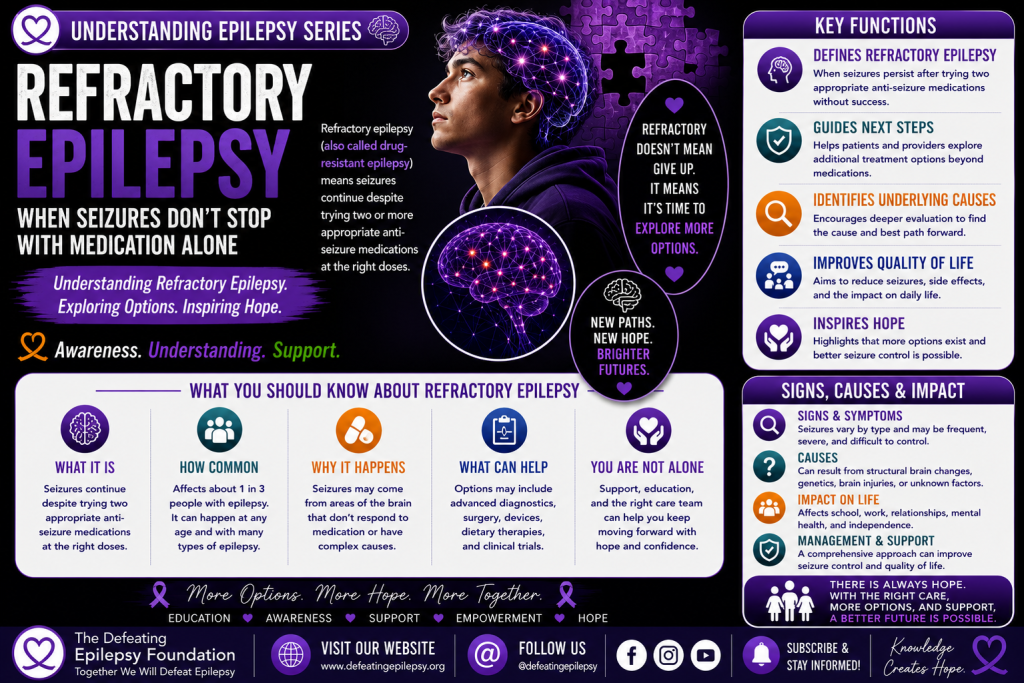
For most people with epilepsy, medication controls the seizures. But for roughly one in three, the seizures don't respond to medication; this is called drug-resistant or refractory epilepsy. Brinlee is in that group. For her, it is the underlying cause of a severe, permanent disability that requires around-the-clock care.

"Undiagnosed"
Despite years of specialists and testing, no one has yet identified the specific underlying cause of Brinlee's epilepsy. Cases this rare are why organizations like the Undiagnosed Disease Network exist to study patients whose conditions don't fit any known diagnosis. We are still seeking answers.

Why 24/7 care
Years of frequent seizures have taken a toll on Brinlee's brain, leaving her with the daily needs of a very young child alongside the constant risk of a seizure, including sudden "drop" seizures and clusters at night. She cannot be left alone, needs help with every part of daily life, and needs someone watching who knows her signs. Her care shapes every hour of our family's day.